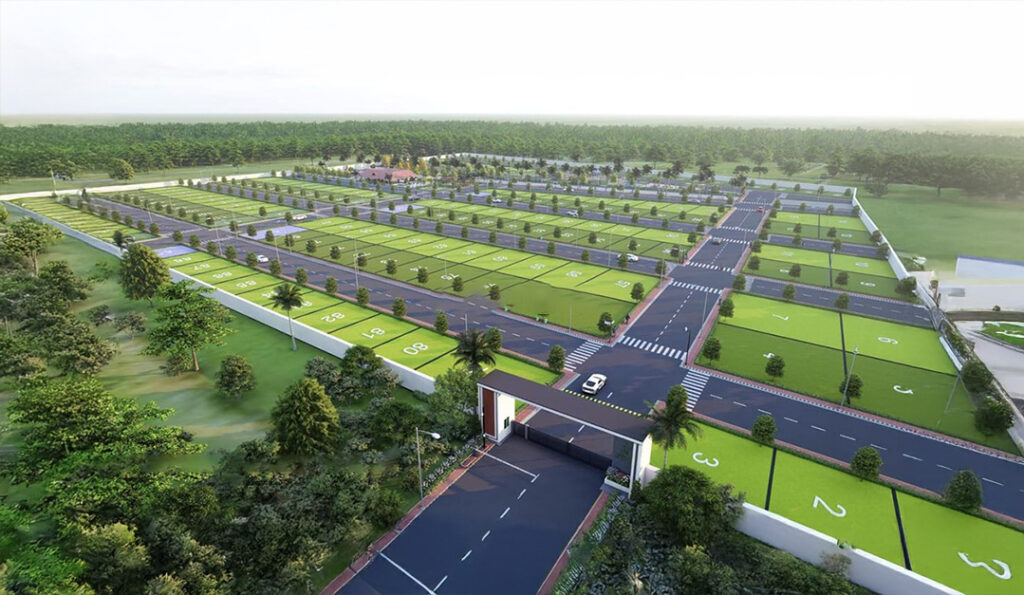
Buying a piece of land in Hyderabad is often seen as a golden ticket to wealth. Everyone has heard stories of people who bought land in Jubilee Hills or Madhapur decades ago and are now millionaires. Driven by these stories, thousands of middle-class families invest their hard-earned savings into open plots in Hyderabad, hoping for the same magic.
However, the reality in 2025 is often different. While many make profits, a significant number of plot buyers in Hyderabad end up regretting their decision deeply.1 Instead of financial freedom, they face legal battles, stalled development, and money that is stuck for years.
Why does this happen? Is it bad luck, or are there specific mistakes that most buyers make?
This article explores the top reasons why real estate investors regret buying plots in Hyderabad and provides a complete guide on how to avoid these traps. We will look at legal issues, fake approvals, hidden costs, and the dangers of unauthorized layouts.
1. Falling for the “Pre-Launch” Offer Trap
One of the biggest reasons for regret is investing in pre-launch offers in Hyderabad. This is a scheme where real estate companies sell plots at a very low price before they even have the land or the government approvals.
The Risk of Soft Launches
Builders often market these as “Soft Launches” or “Expression of Interest” (EOI) offers. They promise that once the HMDA approval comes, the price will double. Greed takes over, and buyers pay lakhs of rupees for a plot that exists only on paper.
The Regret
The regret kicks in when the approval never comes. The government might reject the layout because it is in a conservation zone (GO 111) or on disputed land. In many cases, these “pre-launch” companies vanish overnight with the investors’ money. Even if they stay, the project gets delayed by 3 to 5 years, leaving your money dead with zero appreciation.
2. Buying in Unauthorized Gram Panchayat (GP) Layouts
A common mistake is confusing a Gram Panchayat (GP) layout with a government-approved layout.2 Many agents tell buyers, “This is a GP layout, so it is safe and cheaper.”
The Difference Between HMDA/DTCP and GP Layouts
In Hyderabad, valid approvals come from the Hyderabad Metropolitan Development Authority (HMDA) or the Directorate of Town and Country Planning (DTCP).3
- HMDA/DTCP Layouts: Have wide roads (minimum 30-40 feet), designated park areas, drainage systems, and clear legal standing.4
- Unauthorized GP Layouts: Often have narrow roads, no parks, and no drainage.
Why Buyers Regret GP Layouts
The Telangana government is very strict about unauthorized layouts. You may buy a plot cheaply, but you will face massive problems later:
- Denial of Building Permission: You cannot legally build a house on an unauthorized plot.
- No Bank Loans: Banks do not give loans for construction on these plots.
- Demolition Risk: The municipal authorities have the power to demolish illegal structures or boundary walls in these layouts.
- LRS Charges: You might be forced to pay heavy Layout Regularization Scheme (LRS) penalties later to make it legal, which wipes out your “cheap” purchase advantage.
3. Title Disputes and Double Registrations
Nothing causes more pain than realizing the land you bought belongs to someone else. Land litigation in Hyderabad is a major issue, especially in the outskirts.
The “Double Registration” Scam
In this scam, a fraudster sells the same plot to multiple people.5 Since the Encumbrance Certificate (EC) sometimes takes time to update or can be manipulated in non-computerized areas, you might buy a plot that was already sold to someone else six months ago.
Inheritance Issues
Another common regret involves family disputes. You buy land from a seller, but after two years, the seller’s sister or brother files a court case claiming they did not get their share of the ancestral property. Your investment then gets stuck in civil court battles for 10 or 15 years.
4. The “Future Development” Hype That Never Happens
Real estate agents are experts at selling dreams. They will show you a barren land 50 kilometers away from the city and say, “A big IT Park is coming here next year,” or “The Regional Ring Road (RRR) will pass right next to this venture.”
The Reality of Remote Locations
Many buyers invest in areas like Shadnagar, Yadagirigutta, or Zaheerabad purely based on hype. While these areas have potential, the timeline for development is often 10 to 20 years, not 2 years.
The Regret
After buying, you realize that:
- No companies are coming there.
- There are no roads, water, or electricity.
- You cannot live there because it is too lonely and unsafe.
- When you try to sell, there are no buyers because the “hype” has died down.This is called illiquidity—you have an asset, but you cannot convert it into cash when you need it.
5. Ignoring the Hidden Costs of Plot Ownership
First-time investors often calculate only the cost per square yard. They think, “If I buy at Rs. 10,000 per yard and sell at Rs. 15,000, I make a profit.” They fail to account for the hidden costs of buying land.
Development Charges and Maintenance
In gated communities, developers charge extra for amenities, clubhouses, and road formation.6 If you buy in a private venture, you might have to pay monthly maintenance charges for security and gardening.7 Over 5 years, this adds up to a huge amount that eats into your profit.
Registration and NALA Tax
When you calculate your returns, do not forget the registration charges (which are high in Telangana) and the NALA tax (Non-Agricultural Land Assessment) for converting land use.8 If you sell too soon, these costs mean you might actually lose money or barely break even.
6. Buying Prohibited Lands (Section 22A)
The Telangana Registration Act has a section called Section 22A, which lists lands that cannot be registered (e.g., government land, endowment/temple land, wakf board land, or assigned land).
The Scam
Scammers sometimes create fake documents for these prohibited lands and sell them to unsuspecting buyers.9 The registration might happen through a loophole or a corrupt officer, but the government can cancel your ownership at any time.
The Heartbreak
Years after purchase, you might check the Dharani Portal only to find your survey number listed under the “Prohibited” list. Your land value effectively becomes zero because you cannot legally sell it to anyone else.
7. Lack of Boundary Protection (Encroachment)
Buying the plot is just the first step. Protecting it is the real work. Land encroachment is rampant in rapidly growing cities like Hyderabad.
The “Absentee Landlord” Mistake
Many software employees and NRIs buy plots and then forget about them for years. They do not visit the site or build a compound wall.
When they finally visit after 3 years, they find that a neighbor has moved their fence by 5 feet, or worse, someone has built a small hut on their land. Removing these illegal encroachers is dangerous, expensive, and stressful.
8. The Trap of “Undefined” Undivided Share (UDS)
Recently, a new trend has emerged where builders sell Undivided Share (UDS) of land in a future high-rise project that hasn’t even started.
Why It Is Risky
You are not buying a specific physical plot with four boundaries. You are buying a “share” in a large project. If the builder goes bankrupt or the project is cancelled, you do not own a specific piece of land that you can fence and sell. You just own a paper share in a non-existent project. This is one of the riskiest forms of real estate investment in Hyderabad.
9. Emotional Buying Without Market Research
Many people buy plots because their friends or colleagues are buying. This is called “FOMO” (Fear Of Missing Out).
The Herd Mentality
If a colleague says, “I bought a plot in Maheshwaram,” you might feel pressured to do the same without checking if the price is right. Agents often artificially inflate prices in an area by creating false demand.
The Result
You end up buying at the peak price. For example, if the real value is Rs. 15,000 per yard, but you pay Rs. 25,000 because of the hype, it will take you 7-8 years just to reach the break-even point. You will regret not doing your own comparative market analysis.
10. Misunderstanding Loan Availability
Many buyers assume they can easily get a bank loan. They pay the advance token amount to the seller and then approach the bank.
The Shock
Banks are very conservative about funding open plots.10
- They will never fund unauthorized layouts.
- They rarely fund up to 80% of the market value; they only fund based on the government’s “registration value” (which is often lower than the market price).
- If the loan is rejected, the buyer might lose the advance token amount paid to the seller.
How to Avoid Regret: A Checklist for Smart Buyers
To ensure you don’t become a victim, follow this strict checklist before you pay a single rupee:
- Verify Link Documents: Check the ownership history (Link Documents) for the last 30 years.
- Check Approvals Online: Do not trust the paper the agent shows you. Go to the HMDA or DTCP website and verify the LP (Layout Permission) number.
- Encumbrance Certificate (EC): Get an EC from the registration department to ensure there are no existing mortgages or legal claims.11
- Dharani Portal Check: Use the Dharani Portal to check the status of the survey number and ensure it is not in the prohibited list.12
- Physical Survey: Hire a private surveyor to measure the land physically. Ensure the boundaries on the ground match the map.
- Legal Opinion: Always pay a lawyer to review the property documents. A few thousand rupees spent now can save you crores later.
Conclusion
Investing in land in Hyderabad can still be a life-changing decision in a positive way, provided you are cautious. The buyers who regret their investments are usually those who rushed into deals, trusted the wrong agents, or tried to save money by buying in unauthorized layouts.
Real estate is not a “get rich quick” scheme; it is a game of patience and due diligence.13 By focusing on HMDA/DTCP approved plots, verifying legal titles, and avoiding pre-launch schemes, you can secure an asset that builds generational wealth. Be a smart investor, not an emotional one.
Frequently Asked Questions (FAQs)
1. What is the difference between HMDA and DTCP approved plots?
HMDA (Hyderabad Metropolitan Development Authority) governs the layout approvals within the Hyderabad metropolitan region (core city and suburbs).14 DTCP (Directorate of Town and Country Planning) approves layouts in areas outside the HMDA limits, usually in upcoming towns and districts.15 Both are valid, but HMDA limits generally have higher infrastructure standards.16
2. Is it safe to buy a plot in a Gram Panchayat (GP) layout?
It is generally risky. GP layouts often lack proper infrastructure like wide roads and drainage. Furthermore, they are considered “unauthorized” for building permissions unless they are regularized under schemes like LRS (Layout Regularization Scheme). Banks rarely provide loans for these plots.17
3. What documents should I check before buying a plot in Hyderabad?
You must check the Sale Deed, Link Documents (30 years history), Encumbrance Certificate (EC), Layout Approval copy (HMDA/DTCP), and verify the land status on the Dharani Portal to ensure it’s not prohibited land.
4. Can I get a bank loan for buying open plots in Hyderabad?
Yes, but only for government-approved layouts (HMDA or DTCP). Banks generally do not lend for unauthorized or Gram Panchayat layouts. The loan amount usually depends on the government registration value, not just the market price.
5. What is the “Pre-Launch” offer in Hyderabad real estate?
A pre-launch offer is when a builder sells plots before receiving official government approvals, usually at a lower price. This is highly risky and illegal in many cases. If approvals are denied or delayed, you could lose your entire investment.
6. How do I check if a plot is in a prohibited list (Section 22A)?
You can verify this by checking the specific Survey Number of the land on the Telangana government’s Dharani Portal. It lists lands that are government property, wakf, endowment, or assigned lands which cannot be sold.
7. Why is the Encumbrance Certificate (EC) important?
The EC is a crucial document that shows the history of ownership transfers and whether there are any existing mortgages or loans on the property.18 It proves that the land is free from monetary and legal liabilities.19
8. What are the hidden costs when buying a plot?
Apart from the plot cost, you must budget for Registration Charges (approx. 7.5%), Stamp Duty, NALA tax (for land conversion), legal verification fees, brokerage/agent fees, and potentially development charges demanded by the builder.
9. Can I construct a house immediately on an open plot?
Only if the plot has valid building permissions and basic amenities like water and electricity.20 In unauthorized layouts, you will be denied a building permit until you pay regularization penalties.
10. How can I protect my plot from encroachment?
After purchase, immediately construct a compound wall or permanent fencing. Install a signboard with your name and contact details. crucial step is to visit the plot regularly (at least once every few months) and update the EC annually to ensure no fraudulent transactions have occurred.
Call to Action
Are you looking for 100% clear title and approved plots? Don’t risk your hard-earned money on unverified lands. Visit plotsforsalehyd.in for the most trusted real estate deals in Hyderabad. For expert guidance and safe investments, contact the author, Karna Raju, today to find the perfect plot for your future.